CNC Routing vs Laser Cutting: Which Suits Your Project?
How routing and laser cutting differ in edge quality, detail, corners and material thickness — and how to choose between them for decor and signage.
· 5 min read
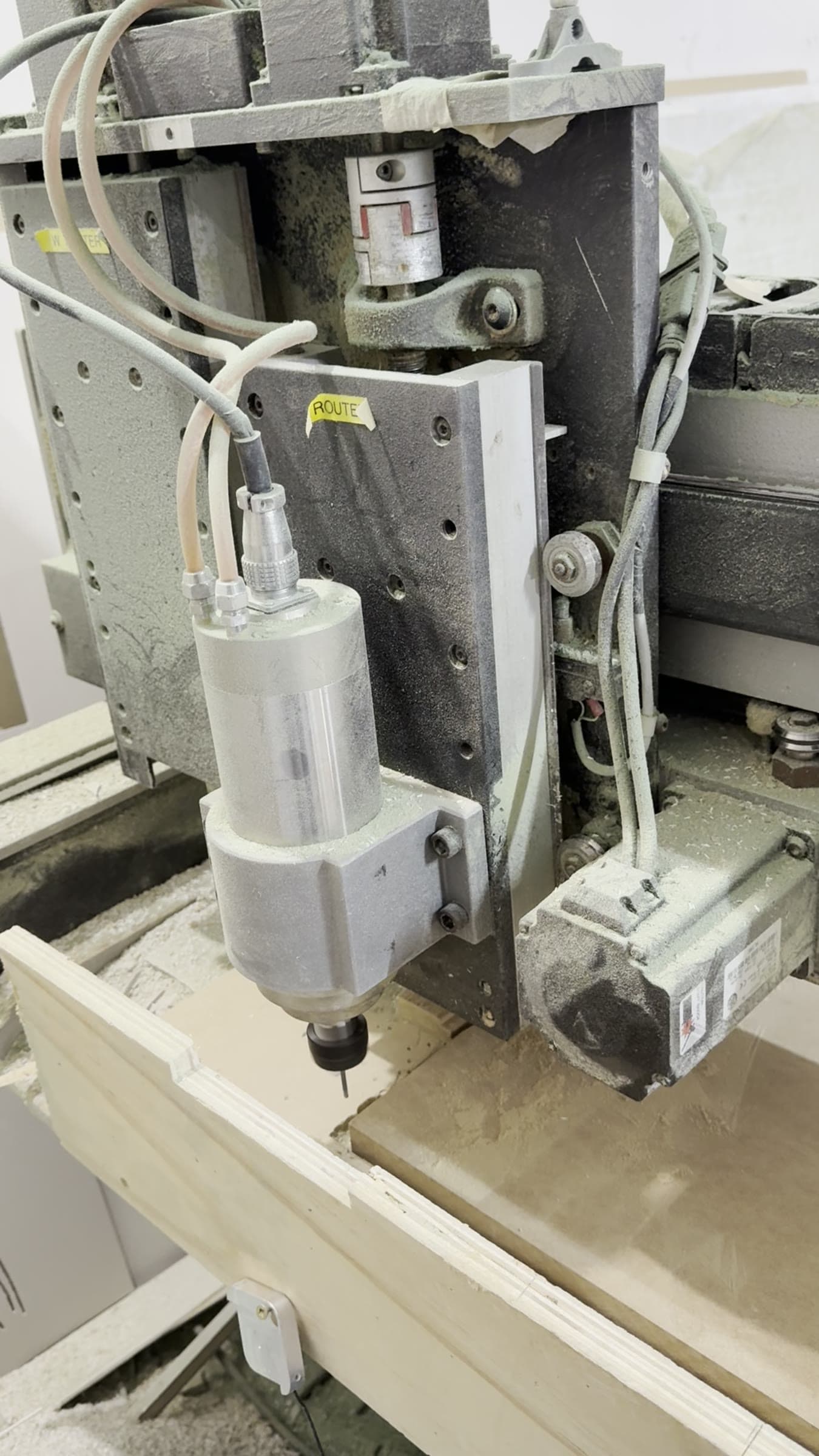
Both processes follow a digital cut path, so both are precise and repeatable. The difference is how they remove material — and that changes which details are possible and how the finished edge looks.
How CNC routing works
A router spins a cutting bit that physically carves material away as it moves across the sheet. Because the bit is round, inside corners are left with a small radius that matches the bit, while outside corners can be crisp.
- Well suited to thicker sheet materials such as MDF
- Produces clean, square-sided edges that take paint well
- Handles large panels, lattice screens and dimensional letters
- Very small internal details are limited by the bit diameter
How laser cutting works
A laser cutter focuses a beam of light that burns or vaporises a narrow line through the material. The cut is extremely thin, so fine details and sharp internal corners are possible.
- Excellent for fine, delicate detail and small parts
- Leaves sharp internal corners
- Edges on wood-based boards are typically darkened by the heat
- Practical material thickness is more limited than routing
Choosing between them
For substantial decorative panels, jali screens and freestanding letters, routing is usually the better fit. For intricate small pieces where the finest detail matters most, laser cutting can be the better tool. Often the right answer depends on the material, thickness and finish you want — which is why we ask about all three when you enquire.
Start your project
Let's make something extraordinary.
Tell us about your space and your idea. We'll help shape it into a piece made precisely for it.